Privacy-first time tracking

Good time tracking respects the people doing the work.

Time tracking should help people understand effort, improve estimates, manage capacity, and bill accurately. It does not need to make every workday feel observed.

A privacy-first tool is transparent about what it records, avoids unnecessary collection, and gives users a clear relationship with shared data. The strongest choice depends on whether you need focused client records, a mature general timer, integrated invoicing, or a broad operations platform.

14-day free trial. No credit card required. No screenshots.

app.timether.com
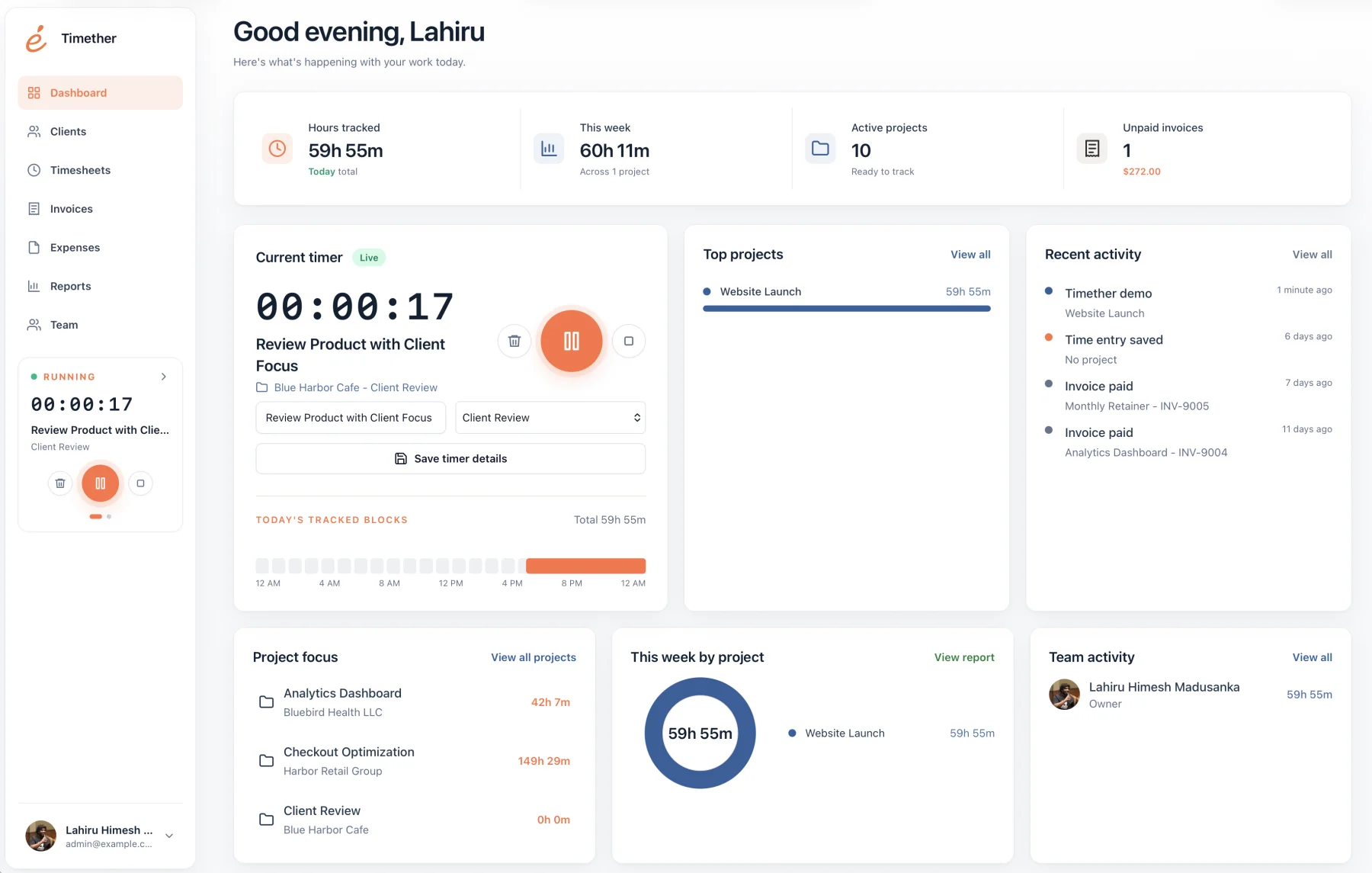
Timether dashboard showing tracked hours, projects, and recent activity
Privacy-first Track work, not people

Selection guide

What makes a time tracker privacy-first?

Privacy is not a decorative claim. It should be visible in the product design, default settings, and the kinds of data the system chooses not to collect.

02
Best mature privacy-conscious option

Toggl Track

Toggl offers broad time tracking and reporting while explicitly rejecting screenshot monitoring and keeping automatically recorded app activity private to the user.

03
Best for invoicing and payments

Harvest

Harvest combines lightweight time tracking with project reports, expenses, invoices, and payment integrations rather than centering its product on employee surveillance.

04
Best for broad operational coverage

Clockify

Clockify provides timers, timesheets, projects, reports, scheduling, time off, and many additional features. Review activity-related settings carefully if data minimization is your priority.

Privacy questions to ask before choosing

A product can use the word privacy while still collecting more information than your team expects. Before rollout, understand exactly what is captured, when collection starts and stops, who can view it, and how long it is retained.

Teams should also decide whether passive activity data is genuinely required. If project records and timesheets answer the business question, screenshots and activity scores may add risk without adding useful clarity.

  • Does the tool capture screens, apps, websites, location, or input activity?
  • Can individual users see and control what becomes shared?
  • Are monitoring features disabled by default or simply configurable?
  • Can the business get the reports it needs from intentional records alone?

Track business outcomes, not digital movement

The most useful time data connects effort to a client, project, task, budget, or invoice. It helps a team find overloaded people, unprofitable engagements, weak estimates, and missing billable work.

Those questions rarely require a screenshot. A privacy-first tracker keeps data collection proportional to the decision being made and makes the shared record understandable to everyone involved.

Introduce privacy-first tracking responsibly

A respectful tool still needs a clear team policy. Explain why time is being recorded, which fields are expected, who can access reports, and how the information will influence billing, planning, or performance conversations. People should not have to discover those rules through the interface.

Review permissions regularly and avoid retaining detailed records longer than the business needs. Give team members a way to correct entries and raise concerns. Privacy-first tracking works best when product design and management practice reinforce the same boundary: collect useful work context, communicate its purpose, and do not quietly expand the scope later.

Common questions

Make the choice with clear expectations.

Short answers about privacy, features, and fit.

Is Timether a surveillance tool?

No. Timether is designed to help people understand time, projects, clients, and billable work. It does not use screenshots, keystroke logging, mouse tracking, or hidden activity monitoring.

Does Timether take screenshots?

No. Timether tracks the time and work details that people intentionally record. It does not capture screenshots.

Who is Timether best for?

Timether is built for freelancers, consultants, small agencies, indie teams, and growing service businesses that need clear time records and client-ready reports.

What is privacy-first time tracking?

It is time tracking designed to collect only the information needed to understand work, with clear controls and without unnecessary surveillance such as screenshots or hidden activity monitoring.

Can a team track accountability without screenshots?

Yes. Project assignment, work descriptions, billable status, timesheet review, reports, and outcome-based management usually provide stronger business context than random screen captures.

Start with better records

Track work without watching people work.

Use Timether to build accurate client and project records while keeping privacy expectations clear.

Start free trial No credit card required